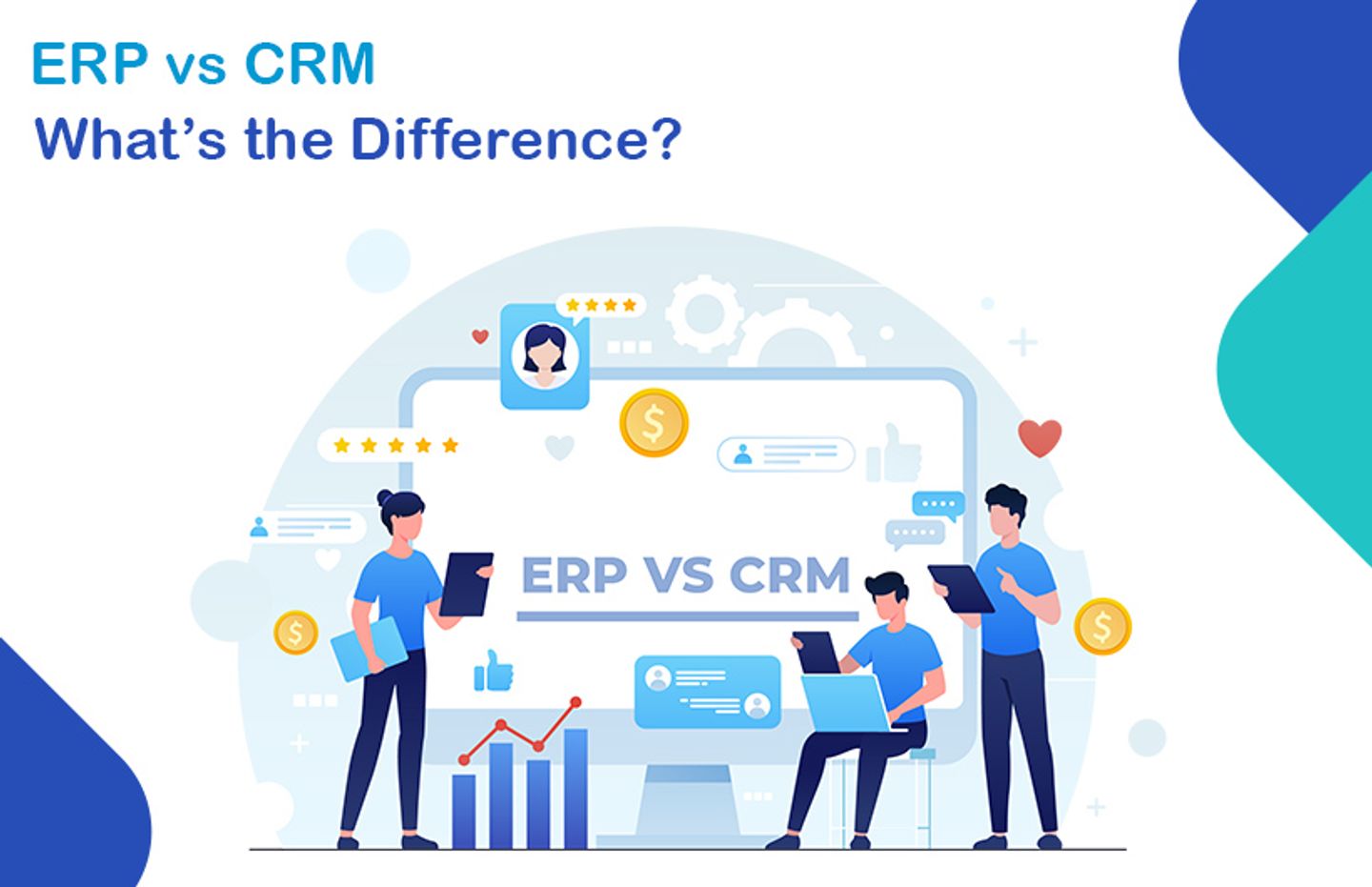

In today’s competitive digital economy, businesses rely heavily on software to streamline operations and improve customer relationships. Two of the most commonly used business systems are ERP vs CRM solutions.
But many business owners still ask:
“Do I need ERP or CRM? Or both?”
Understanding the difference between ERP and CRM can help you invest in the right technology, save costs, and scale faster.
This guide explains everything in simple terms — features, benefits, use cases, and how to choose the best solution for your business.
ERP (Enterprise Resource Planning) manages internal business processes like finance, inventory, HR, and operations.
CRM (Customer Relationship Management) focuses on managing customer data, sales, marketing, and support.
- ERP = Internal operations
- CRM = Customer relationships
Most growing businesses eventually need both.
What is ERP?
ERP (Enterprise Resource Planning) software integrates all core business processes into one centralised system.
Key Functions of ERP
- Accounting & finance
- Inventory management
- Procurement
- Supply chain
- Manufacturing
- HR & payroll
- Reporting & compliance
Benefits of ERP
- Improves operational efficiency
- Reduces manual work
- Real-time business insights
- Better cost control
- Centralized data management
Example Use Case
If your business struggles with stock tracking, purchase orders, or accounting errors, ERP is the solution.
What is CRM?
CRM (Customer Relationship Management) software helps businesses manage interactions with leads, prospects, and customers.
Key Functions of CRM
- Lead management
- Sales pipeline tracking
- Customer database
- Email marketing
- Customer support tickets
- Sales forecasting
Benefits of CRM
- Increases sales conversions
- Improves customer satisfaction
- Better follow-ups
- Personalized marketing
- Stronger retention
Example Use Case
If your sales team loses leads or lacks customer insights, CRM is essential.
ERP vs CRM: Side-by-Side Comparison
- Focus — ERP: Internal operations; CRM: Customer relationships
- Users — ERP: Finance, HR, Ops teams; CRM: Sales, marketing, support
- Goal — ERP: Efficiency & cost control; CRM: Revenue growth
- Data Type — ERP: Inventory, payroll, accounts; CRM: Leads, contacts, deals
- Business Stage — ERP: Scaling/complex operations; CRM: Growth & sales expansion
When Do You Need ERP?
Choose ERP if:
- You manage a large inventory
- You run manufacturing or distribution
- You need accounting automation
- Multiple departments need integration
- You want better financial control
When Do You Need CRM?
Choose CRM if:
- You want to improve sales
- You generate many leads
- Customer follow-ups are inconsistent
- Marketing needs automation
- Retention is low
Do You Need Both ERP and CRM?
Yes — most mid-size and large businesses benefit from both systems.
Here’s why:
- CRM brings customers in
- ERP fulfils the orders
Example Workflow
1. Lead captured in CRM
2. Deal closed
3. Order processed in ERP
4. Inventory updated
5. Invoice generated
Together, they create a seamless business ecosystem.
ERP vs CRM Integration Benefits
Integrating ERP and CRM offers:
- Unified customer & financial data
- Faster order processing
- Accurate forecasting
- Improved decision-making
- Better customer experience
Businesses that integrate both systems often see:
- Higher productivity
- Lower operational costs
- Faster growth
How Monarch Innovation Helps
At Monarch Innovation, we specialize in:
- ERP implementation
- CRM development
- ERP-CRM integration
- Custom business automation
- Data migration & modernization
Our experts analyze your business workflow and recommend the right solution — whether you need ERP, CRM, or both — ensuring maximum ROI and smooth digital transformation.
Final Thoughts
Choosing between ERP vs CRM isn’t about picking one over the other — it’s about understanding your business priorities.
If you want:
- Better sales → CRM
- Better operations → ERP
- Complete transformation → Both
Partnering with an experienced technology provider like Monarch Innovation ensures you implement the right solution, the right way.
FAQs
1. What is the main difference between ERP and CRM?
ERP manages internal processes like finance and inventory, while CRM manages customer relationships and sales.
2. Can small businesses use ERP?
Yes, but most start with CRM first and adopt ERP when operations become complex.
3. Is CRM part of ERP?
Some ERP systems include CRM modules, but dedicated CRM tools often provide more advanced sales features.
4. Which is better: ERP or CRM?
Neither is better — they serve different purposes. The right choice depends on your business needs.
5. Should ERP and CRM be integrated?
Yes, integration improves data accuracy, efficiency, and customer service.