BOM automation in manufacturing refers to the use of digital systems to create, manage, and update the Bill of Materials across the production lifecycle. By replacing manual spreadsheets and disconnected tools, manufacturers gain better accuracy, faster updates, and improved coordination between eng

Harsh Joshi
Co-founder & Technical Director
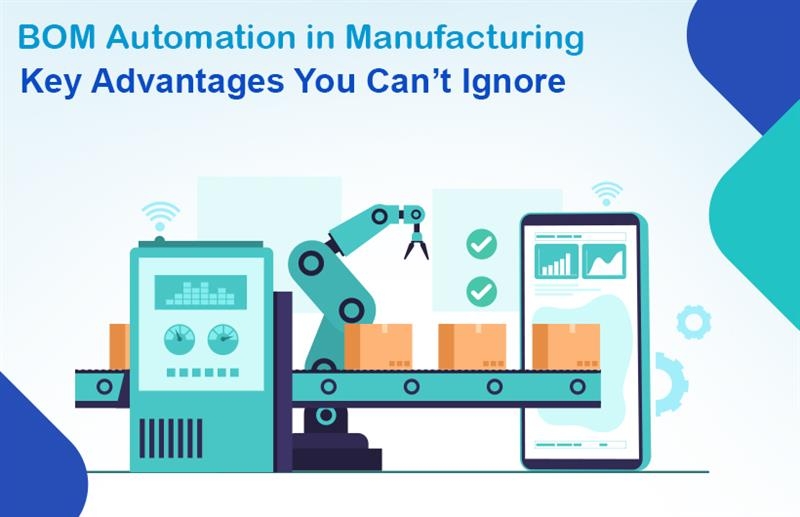
BOM automation in manufacturing refers to the use of digital systems to create, manage, and update the Bill of Materials across the production lifecycle. By replacing manual spreadsheets and disconnected tools, manufacturers gain better accuracy, faster updates, and improved coordination between engineering, procurement, and production teams. As manufacturing processes become more complex, BOM automation plays a critical role in reducing errors, controlling costs, and maintaining operational efficiency.
What Is BOM Automation in Manufacturing?
BOM automation is the process of managing the Bill of Materials through automated software that keeps component data, quantities, and revisions synchronized in real time. It ensures that all departments work with the same updated BOM, eliminating inconsistencies that often occur in manual systems.
Why BOM Automation Matters in Modern Manufacturing
Manual BOM handling increases the risk of incorrect material usage, delayed procurement, and production downtime. BOM automation addresses these challenges by improving data visibility and maintaining consistency throughout the manufacturing workflow.
Key Advantages of BOM Automation in Manufacturing
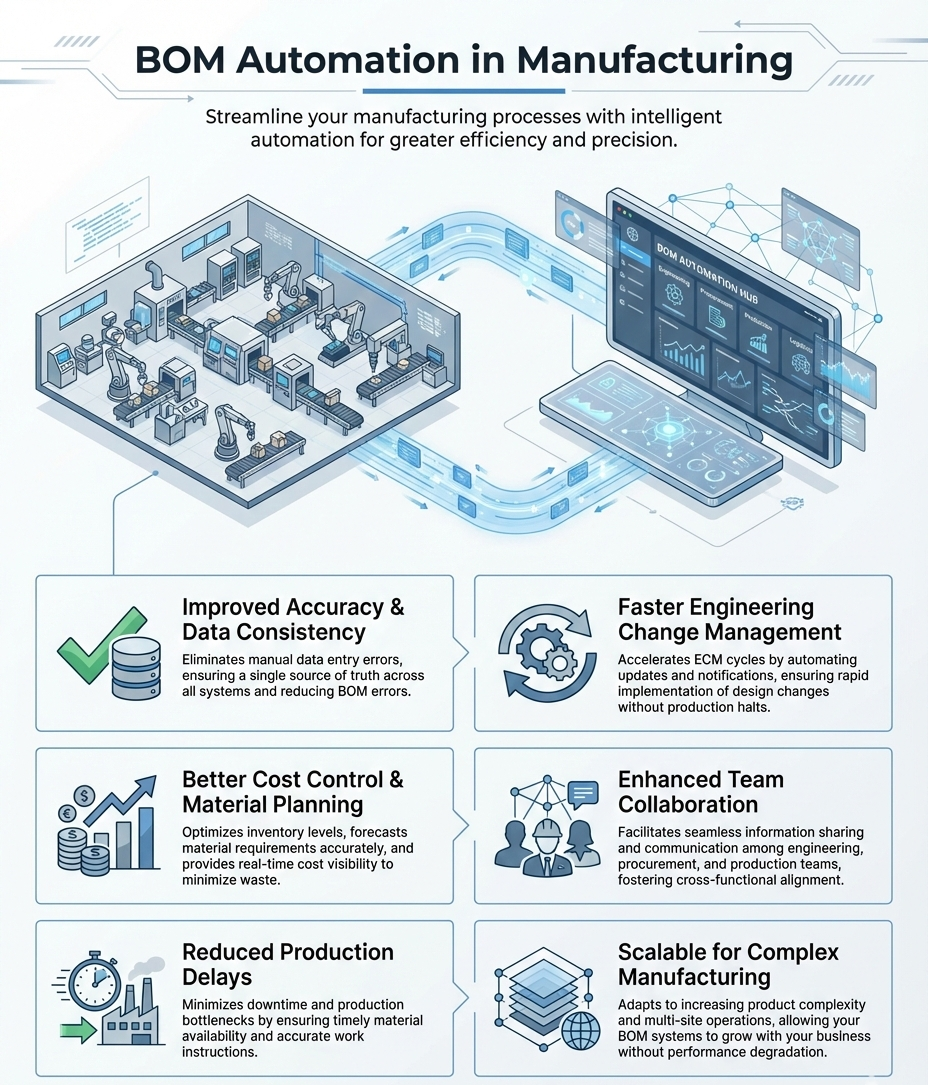
1. Improved Accuracy and Data Consistency
Automated BOM management minimizes human errors by maintaining a single source of truth. Any change in materials or specifications is reflected instantly, reducing the chances of outdated or incorrect information being used during production.
2. Faster Engineering Change Management
Design changes are common in manufacturing. BOM automation allows revisions to be updated and shared across teams in real time, helping manufacturers avoid rework, scrap, and delays caused by outdated BOM versions.
3. Better Cost Control and Material Planning
With BOM automation, manufacturers gain real-time visibility into material and component costs. This enables better forecasting, optimized purchasing decisions, and reduced wastage, leading to improved cost efficiency.
4. Enhanced Cross-Department Collaboration
BOM automation connects engineering, procurement, inventory, and production teams on a single platform. This improves communication, reduces dependency on emails or spreadsheets, and ensures smoother coordination across departments.
5. Reduced Production Delays
Accurate and up-to-date BOMs help ensure that the right materials are available when needed. This reduces stock shortages, excess inventory, and unexpected production interruptions.
6. Scalability for Complex Manufacturing Operations
As product structures grow more complex, managing multi-level BOMs manually becomes difficult. BOM automation supports scalability by handling complex assemblies and high product variants without increasing administrative workload.
Role of BOM Automation in Digital Manufacturing
BOM automation is a foundational element of digital manufacturing. When integrated with ERP or PLM systems, it supports real-time production planning, improved supply chain visibility, and faster time-to-market. Companies like Monarch Innovation help manufacturers implement BOM automation solutions that align with modern Industry 4.0 requirements.
Who Can Benefit from BOM Automation?
BOM automation is beneficial for:
- Discrete manufacturers
- OEMs and contract manufacturers
- Automotive and electronics industries
- Businesses managing frequent design changes
Conclusion
It is no longer optional for companies aiming to stay competitive. By improving accuracy, cost control, collaboration, and scalability, automated BOM management enables manufacturers to streamline operations and reduce production risks. Implementing the right BOM automation solution with experienced partners such as Monarch Innovation helps ensure long-term efficiency and sustainable growth.