Manufacturing is evolving at an unprecedented pace, driven by digital transformation, artificial intelligence, Internet of Things (IoT), robotics, and data-driven decision-making. Understanding the top trends in Manufacturing automation is crucial for manufacturers who want to stay competitive, scalable, and future-ready.
At Monarch Innovation, we specialize in delivering cutting-edge automation solutions — from smart factory implementation to AI-powered analytics — helping companies transform traditional factories into intelligent production ecosystems.
What Is Manufacturing Automation?
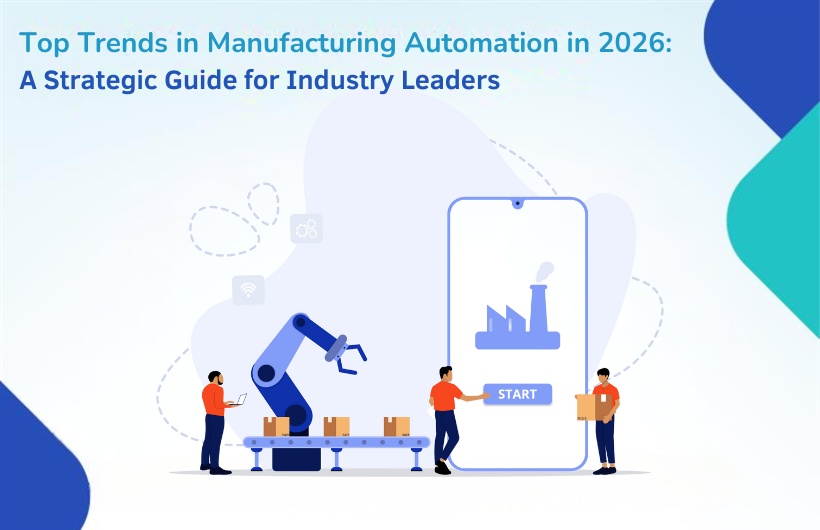
Manufacturing automation refers to the use of advanced technologies such as robotics, artificial intelligence (AI), machine vision, IoT sensors, and software systems to perform industrial processes with minimal human intervention. Automation improves production efficiency, quality, safety, and reduces operational costs.
Why Manufacturing Automation Matters in 2026
- Accelerated production cycles
- Reduced human errors
- Increased output with optimum resource use
- Lower downtime & predictive operations
The global market for manufacturing automation is rapidly expanding — projected to grow significantly through 2030 thanks to Industry 4.0 adoption.
Top 12 Trends in Manufacturing Automation
1. Smart Manufacturing & Industry 4.0
Smart manufacturing integrates AI, IoT, analytics, and automation to create connected production systems. It enables rapid decision-making and predictive planning based on real-time data.
2. Industrial AI & Data-Driven Decision Systems
AI in manufacturing is expanding from analytics to active decision systems that optimize workflows, predict machine failures, and automate tasks once performed manually.
3. Collaborative Robots (Cobots)
Cobots work safely alongside humans, scaling labour productivity across industries such as automotive, electronics, and packaging.
4. Predictive & Preventive Maintenance
By leveraging IIoT and analytics, machines can signal maintenance needs before failures occur, reducing unplanned downtime and repair costs.
5. Digital Twin Technology
Digital twins are virtual replicas of real assets, used for simulation, testing, and optimisation without disrupting live systems.
6. Autonomous Mobile Robots (AMRs)
Mobile robots enable self-navigating logistics, material handling, and warehouse automation that reduces delays and labour bottlenecks.
7. Edge Computing & Real-Time Processing
Edge computing shifts data processing from centralised clouds to local devices, improving speed and responsiveness for automated systems.
8. Industrial Internet of Things (IIoT)
IIoT connects machines and systems, allowing rich datasets that fuel AI, analytics, predictive monitoring, and real-time decision intelligence.
9. 5G-Enabled Smart Factories
High-speed networks such as 5G are crucial in delivering fast, low-latency communication between industrial devices — a key element of next-generation automation.
10. Augmented Reality (AR) & Wearables for Workers
AR helps technicians with on-site diagnostics, guided maintenance, and assembly visualisations — often used with digital twin platforms.
11. Lights-Out Manufacturing
Fully automated “lights-off” factories run independently without a physical workforce on site.
12. Cybersecurity in Manufacturing
As factories become more connected, cybersecurity emerges as a top priority to protect operational technology (OT), IoT devices, and production data.
Manufacturing Automation Market Landscape
| Metric | 2025 & Beyond |
|---|---|
| Global Industrial Automation Market | USD ~275B (2025) projected to grow steadily through 2030 |
| Manufacturing Automation Market | USD ~12.28B in 2023, projected to almost double by 2030 |
| CAGR | ~9–10% through 2030 |
How Monarch Innovation Drives Automation Results
Monarch Innovation delivers end-to-end manufacturing automation capabilities, including:
- Smart Factory Strategy & Roadmap
- IIoT Implementation & Integration
- AI-powered predictive analytics platforms
- Robotics & automation system integration
- Digital Twin & simulation technologies
- AR-enabled workforce augmentation
- Edge computing and secure production ecosystems
Our solutions align with the trends in Manufacturing automation that industry leaders are adopting in 2026 and beyond.
Final Takeaway
Manufacturing automation is no longer optional — it’s a strategic imperative. Leveraging the top trends in Manufacturing automation will help businesses outperform competitors, improve ROI, and thrive in complex global markets.
FAQ
Q1. What are the latest manufacturing automation trends in 2026?
AI systems, smart factories, predictive maintenance, IIoT, digital twins, autonomous robots, AR/VR, and cybersecurity are among the top trends.
Q2. How does automation benefit manufacturing?
Automation increases throughput, reduces errors, lowers costs, enhances safety, enables predictive operations, and improves quality.
Q3. What technologies complement manufacturing automation?
AI, IoT, robotics, edge computing, AR, 5G connectivity, and cloud platforms integrate to strengthen automated systems.