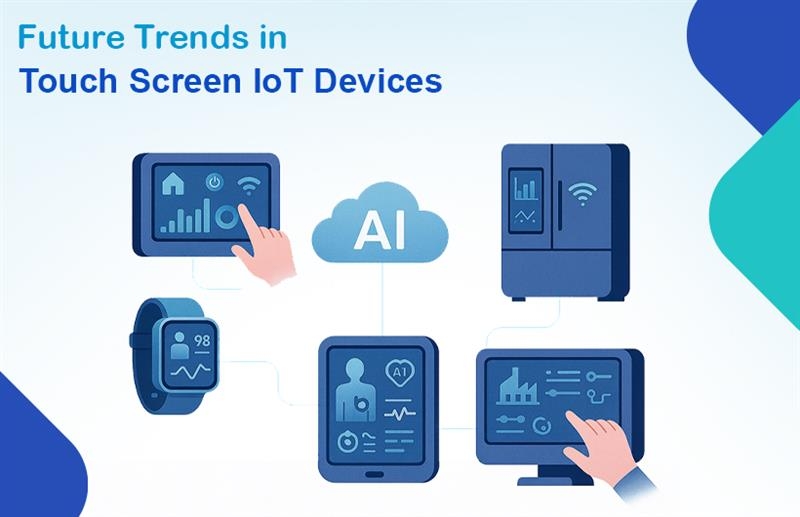

As the Future of touchscreen IoT devices continues to evolve, the demand for smarter, more intuitive interfaces has grown dramatically. Touchscreens have become one of the most important bridges between humans and machines. From smart thermostats and appliances to advanced industrial control panels, these interfaces are changing how we interact with the connected world. Looking ahead, the Future of touchscreen IoT devices is full of exciting innovations that promise to reshape both consumer and industrial experiences.
Let’s explore the key trends shaping the next generation of touchscreen interfaces in IoT.
1. Flexible and Printed Displays
One of the most revolutionary developments is the integration of flexible OLED and printed e-ink displays into IoT devices. These thin, bendable screens can be wrapped around curved surfaces or embedded into wearables and patches. For example, a medical patch with a printed display can show real-time health data without needing a bulky device.
Printed electronics could also enable cost-effective displays in disposable items, think packaging, with e-ink screens for dynamic instructions or expiration alerts. As the Future of touchscreen IoT devices expands, printed electronics will make cost-effective and creative interfaces more accessible.
2. Micro-LED and High-Brightness Technology
Micro-LED displays are gaining grip for their ability to deliver high resolution, excellent energy efficiency, and superior brightness, crucial for outdoor and industrial settings. Unlike OLEDs, micro-LEDs are not prone to burn-in, making them ideal for long-life IoT products.
As this technology matures, we can expect its integration in augmented reality (AR) wearables, heads-up displays in vehicles, and smart helmets, where visibility under bright sunlight and durability are non-negotiable.
3. Voice and Touch Fusion
The shift toward multimodal interfaces combining touch, voice, and visual feedback is transforming IoT usability. Devices like the Echo Show have just begun. Future systems will include touch-enabled voice devices with small displays for status updates, options for manual overrides, or emergency control.
Imagine a smart light panel that listens to voice commands but also includes a small e-ink screen to show power usage or alerts. This trend will further shape the Future of touchscreen IoT devices by making interactions more accessible and user-centric.
4. Gesture and Proximity Sensing
Next-gen IoT devices will use gesture recognition and proximity sensors to deliver touch-free interactions. Inspired by projects like Google's Soli, this technology can detect mid-air hand motions to scroll, switch modes, or activate screens, all without physical contact.
Such capabilities are especially useful in sterile or hazardous environments, such as hospitals or manufacturing plants, where users may not want to touch shared surfaces.
5. AI and Touchscreen Integration in IoT
The fusion of AI and touchscreen interfaces in IoT will redefine the user experience. Devices will learn individual usage patterns, adapt their menus, and provide predictive actions. For instance, an industrial machine might display routine maintenance alerts based on historical usage, or a smart oven might recommend preheating based on time of day and past habits.
On-device AI will also enhance natural language processing, real-time translation, and visual recognition, empowering screens to be smarter and more context-aware.
6. Standardised UX Frameworks
As the IoT landscape becomes more crowded, there's a growing need for standardised interface designs, especially in industrial applications. We may soon see universal design guidelines for IoT device displays, akin to how mobile apps follow Android or iOS UI norms.
Standardisation will reduce training time, improve safety, and enhance interoperability across devices from different manufacturers.
7. AR Overlays Instead of Built-In Screens
An exciting alternative to embedded displays is augmented reality (AR). Devices might not include a physical screen at all. Instead, they broadcast their data to nearby AR glasses or smartphones, which overlay information in the user’s view.
This is a space-saving and cost-effective approach, especially in environments where numerous IoT sensors are deployed. It also enables a seamless user experience, reducing screen clutter while enhancing visibility.
8. Energy Harvesting Displays
IoT devices must prioritise energy efficiency. Future screens may use solar panels, RF energy harvesting, or even NFC-based power activation to operate without batteries.
Imagine e-ink labels on grocery shelves that update prices only when triggered by a central signal or smart tags that draw energy from your phone when tapped. These innovations will support ultra-low-power deployments, making maintenance virtually zero.
9. Durability for Extreme Environments
For industrial and outdoor IoT use, durability is paramount. Future displays will use self-healing coatings, diamond-like carbon glass, and even adaptive temperature regulation to withstand extreme conditions.
Touchscreens designed for temperatures ranging from -40°C to +70°C, for instance, will be necessary for outdoor installations, mining operations, or high-altitude applications. These durable solutions will ensure longevity without sacrificing usability.
10. Wearable-Linked Displays
Finally, many IoT interfaces may shift from device-based to wearable-linked displays. A smartwatch or AR glasses could dynamically pair with nearby IoT sensors, showing relevant data as users move around.
For example, a technician’s watch could display live metrics from a machine they approach without the need for every machine to have its own screen. This method streamlines design and leverages personal devices for efficiency.
Conclusion: Touchscreens Will Be Smarter, Smaller, and More Intuitive
The Future of touchscreen IoT devices is moving toward intelligent, adaptive, and context-aware solutions. From next-gen touchscreen interfaces in IoT powered by AI, to flexible, invisible, and wearable-linked displays, our interactions with machines will become more seamless than ever.
At Monarch Innovation, we are at the forefront of this transformation. With deep expertise in IoT device design, UI/UX development, and embedded systems, Monarch enables businesses to build future-ready interfaces that are not only functional but also intuitive and scalable. Whether you're looking to prototype a smart wearable or design an industrial control panel with advanced touch features, our team delivers end-to-end solutions tailored to tomorrow’s standards.
To stay ahead in the IoT game, integrating advanced touchscreen technologies isn’t just an option; it’s a necessity. Partner with Monarch Innovation and bring your next-generation IoT vision to life.
FAQs
1. What is the future of touchscreen IoT devices?
The future of touchscreen IoT devices includes flexible displays, AI-driven interfaces, gesture control, and ultra-low-power screens. These technologies make IoT devices smarter, more intuitive, and easier to use across consumer and industrial applications.
2. How will AI improve touchscreen IoT devices in the future?
AI will enhance touchscreen IoT devices by learning user behaviour, offering predictive actions, personalising menus, improving automation, and enabling faster decision-making. This creates a more intelligent and efficient user experience.
3. Why are flexible and printed displays important for the future of touchscreen IoT devices?
Flexible and printed displays allow IoT devices to be lightweight, bendable, and suitable for wearables or curved surfaces. They reduce cost, improve durability, and support new design possibilities that redefine how users interact with connected devices.