

Piping Stress Analysis and Thermal Evaluation
Piping Stress Analysis and Thermal Evaluation Services
Are your pipes safe under pressure, heat, and load? Monarch Innovation checks every pipe system against international codes like ASME B31.3. We make sure nothing cracks, leaks, or fails.
15+
Years of Experience
500+
Systems Analysed
40+
Industries Served
100%
Code Compliant
SERVICE OVERVIEW
What Is Piping Stress Analysis?
Piping stress analysis is a way of checking if pipes in a plant or facility are safe. It tests whether pipes can handle pressure, heat, weight, and movement without breaking or leaking. Engineers use special software and international codes like ASME B31.3 to do this check. It is required for most industrial plants before construction starts.
Every pipe in a plant faces stress. Heat makes pipes expand. Pressure pushes from inside. Heavy equipment pulls them down. Earthquakes or vibrations add force.
If you do not check for these stresses, pipes can crack, bend, leak, or fail. A piping stress analysis finds these problems before they happen.
Monarch Innovation has done this analysis for over 1,200 piping systems in oil and gas, power, and chemical plants. Our engineers use Caesar II and AutoPIPE software and follow ASME, API, and EN codes.
Why Does Your Business Need Piping Stress Analysis?
- It is required by ASME B31.3, B31.1, and other international codes
- It protects pumps, compressors, and pressure vessels from damage
- It prevents expensive plant shutdowns and repairs
- It helps you pass inspections and get approvals faster
- It saves money by optimizing pipe supports before construction begins
What Is Thermal Evaluation of Piping?
Thermal evaluation of piping checks how pipes behave when they get hot or cold. When pipes heat up, they expand and push against supports and connected equipment. When they cool down, they contract. If this movement is not managed properly, pipes can crack and equipment can be damaged. Thermal evaluation finds the right pipe layout and support design to allow safe movement.
Hot pipes expand. Cold pipes shrink. In a power plant or refinery, pipes can reach 500 degrees Celsius or higher. Even small temperature changes create big forces.
Thermal evaluation tells us how much a pipe will move and whether that movement is safe. It also helps design the right type of pipe supports to guide that movement without causing damage.
What Thermal Evaluation Checks
- How much a pipe expands when heated
- Whether the pipe layout gives enough flexibility for that movement
- Whether forces on pumps and vessels are within safe limits
- Where flexible joints or expansion loops are needed
- Whether fatigue from repeated heating and cooling will cause cracks over time.
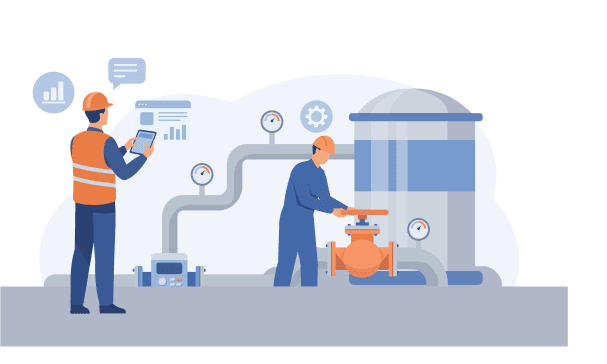
OUR SERVICES
Our Piping Stress Analysis and Thermal Engineering Services
We cover every type of piping analysis your plant may need.
Static Pipe Stress Analysis
We check if your pipes are safe under their normal operating loads including pressure, weight, and temperature. We follow ASME B31.3, B31.1, and B31.8 codes.
Full code compliance on every line
Thermal Expansion Analysis
We calculate how much pipes move when they heat up or cool down, and make sure that movement does not damage equipment or cause pipe failure.
Protect equipment from thermal overload
Seismic and Dynamic Analysis
We check if pipes can handle earthquakes, pressure pulses, pump vibrations, and emergency valve shutdowns without failing.
Safe in seismic zones and dynamic environments
Pipe Support Design
We design the right supports for each pipe based on calculated loads. This includes hangers, shoes, spring supports, and restraints.
Reduce support cost by up to 35 percent
Nozzle Load Verification
We calculate the forces and moments acting on pump and compressor nozzles and check them against API 610 and API 617 limits.
Prevent pump and compressor damage
Water Hammer Analysis
We analyze sudden pressure waves caused by pump trips or valve closures and check whether pipes and supports can absorb those forces
Prevent impact damage from pressure surges
Fatigue Life Assessment
For pipes that heat and cool repeatedly, we calculate how many cycles they can take before cracking, and recommend inspection schedules.
Predict and extend pipe service life
Brownfield and As-Built Analysis
We analyze existing pipe systems in older plants that are being upgraded or modified. We rebuild the model from current drawings or field measurements.
Safely expand or modify existing plants
Need Accurate Piping Stress Analysis for Your Project?
Get a Free QuoteOUR PROCESS
How Does Our Piping Stress Analysis Process Work?
Our process is simple, clear, and built to avoid surprises.
You Send Us Your Drawings
Send us your pipe isometrics, line list, and operating conditions. We review everything and send back a scope and cost estimate within 24 hours.
We Define the Load Cases
We agree on the operating conditions, applicable code, and which load combinations to analyze. This step prevents confusion later.
We Build the Pipe Model
Our engineers create a detailed 3D model of your pipe system in Caesar II or AutoPIPE. A second engineer then checks that model before any analysis runs.
We Run the Analysis
We run all required load cases, check stress ratios against code limits, review nozzle loads, and document all results clearly.
We Fix Any Problems Found
If any pipe or support fails the code check, we redesign it. We suggest pipe rerouting, additional supports, or layout changes as needed.
We Issue the Final Report
You receive a full calculation report, stress isometrics, pipe support schedule, and nozzle load summary. We answer all review questions from your team or the inspector.
You Send Us Your Drawings
Send us your pipe isometrics, line list, and operating conditions. We review everything and send back a scope and cost estimate within 24 hours.
We Define the Load Cases
We agree on the operating conditions, applicable code, and which load combinations to analyze. This step prevents confusion later.
We Build the Pipe Model
Our engineers create a detailed 3D model of your pipe system in Caesar II or AutoPIPE. A second engineer then checks that model before any analysis runs.
We Run the Analysis
We run all required load cases, check stress ratios against code limits, review nozzle loads, and document all results clearly.
We Fix Any Problems Found
If any pipe or support fails the code check, we redesign it. We suggest pipe rerouting, additional supports, or layout changes as needed.
We Issue the Final Report
You receive a full calculation report, stress isometrics, pipe support schedule, and nozzle load summary. We answer all review questions from your team or the inspector.
WHY MONARCH INNOVATION
Why Choose Monarch Innovation for Piping Stress Analysis?
There are many pipe stress engineers available. Here is what makes Monarch Innovation different.
Multi-Code Experts
We work with ASME B31.1, B31.3, B31.4, B31.8, EN 13480, and API 610/617/661 daily.
ISO 9001 Certified Quality
Every calculation is independently checked by a second engineer before it goes to you.
Advanced Software Proficiency
Our team uses Caesar II, AutoPIPE, ROHR2, and START-PROF depending on what your project requires.
PE-Stamped Reports Available
Licensed engineer stamping is available for projects that require regulatory approval or third-party certification.
Your Data Is Secure
We sign NDA agreements on day one and use controlled document transfer systems for all project files.
Full Lifecycle Support
From early design through construction, commissioning, and future modifications, we support your plant at every stage.
Fast Response
You get a detailed scope and cost estimate within one business day of sending your drawings.
TECHNOLOGIES WE USE
Piping Stress Analysis Software And Codes We Use
Analysis Software
- Caesar II (Hexagon) - global industry standard
- AutoPIPE (Bentley) - power and nuclear projects
- ROHR2 - European projects
- START-PROF - oil and gas pipeline analysis
Piping Codes We Follow
- ASME B31.3 - Process Piping
- ASME B31.1 - Power Piping
- ASME B31.4 - Pipeline Transportation
- ASME B31.8 - Gas Transmission
- EN 13480 - European Industrial Piping
- API 610 and API 617 - Pump and Compressor Nozzle Loads
- NEMA SM23 - Steam Turbine Connections
BUSINESS BENEFITS
What Are the Benefits of Piping Stress Analysis?
Getting your pipe stress analysis done properly saves money, prevents failures, and keeps your project on schedule
Benefit
Impact
Avoid Expensive Failures
Catching a stress problem before construction costs a fraction of what a pipe failure or emergency repair costs after startup.
Save on Pipe Supports
A proper analysis often reduces the number of supports needed by 25 to 35 percent compared to conservative rule-of-thumb design.
Protect Your Equipment
Verified nozzle loads prevent pump and compressor damage caused by excessive pipe forces, saving you from repeated mechanical seal failures.
Get Regulatory Approvals Faster
A complete, code-compliant calculation package reduces back-and-forth with inspectors and helps you get construction permits faster.
Safely Modify Existing Plants
Before changing anything in an existing plant, analysis confirms the change is safe for the pipes already installed.
One Partner for Everything
Stress analysis, support design, and nozzle load checks all from one team means fewer coordination problems and clearer accountability.
Ready to Build a Safer, More Reliable Piping Network?
Contact our Experts→INDUSTRIES WE SERVE
Which Industries Need Piping Stress Analysis?
Any industry that uses pipes under pressure or high temperature needs this service. Here are the sectors we work with most often.
Oil and Gas
Refineries, gas plants, and offshore platforms all require ASME B31.3 and B31.8 compliant stress analysis for safe operation.
Power Generation
Steam and feedwater pipes in power plants operate at very high temperatures and pressures. ASME B31.1 compliance is mandatory.
Chemical and Petrochemical
Aggressive chemicals, extreme temperatures, and high pressures make pipe integrity critical in these plants.
LNG and Cryogenic Plants
Pipes that carry liquid gas at minus 160 degrees Celsius behave very differently from normal pipes and need specialist analysis.
Pharmaceutical Plants
Hygienic piping systems need precise support spacing and deflection control to meet GMP and regulatory standards.
Industrial Facilities
Factories and utility plants with steam, compressed air, and cooling water systems also benefit from proper pipe stress review.
Offshore and Marine
Pipes on floating platforms face movement from waves and wind in addition to pressure and heat, requiring combined load analysis.
Nuclear Facilities
Nuclear piping requires the highest level of analysis and documentation under ASME Section III with full seismic qualification.
Design Smarter Piping Systems for Better Performance.
Schedule a Free Technical Call →FAQ SECTION
Frequently Asked Questions
Need Accurate Piping Stress Analysis for Your Project?
Our specialists deliver detailed stress evaluations to help ensure safe, reliable, and code-compliant piping systems.